

Last week's Hall of Fame game was an outstanding matchup that went down to the wire. Haynes King scored the game-winning touchdown as time expired, giving the Carolina Panthers a 33-30 victory over the Arizona Cardinals. While last week's lone game was exciting, the official start of the preseason is on Thursday night. Let's take a look at my favorite Week 1 NFL preseason picks between the Green Bay Packers and Pittsburgh Steelers.
- More NFL Betting Advice
- NFL Prop Bet Cheat Sheet
- Expert NFL Game Picks
- NFL Betting Strategy
- Best +EV NFL Picks
Get instant alerts when a line reaches your target via the BettingPros App >>

Thursday’s Best NFL Preseason Picks: Green Bay Packers at Pittsburgh Steelers
Green Bay Packers at Pittsburgh Steelers
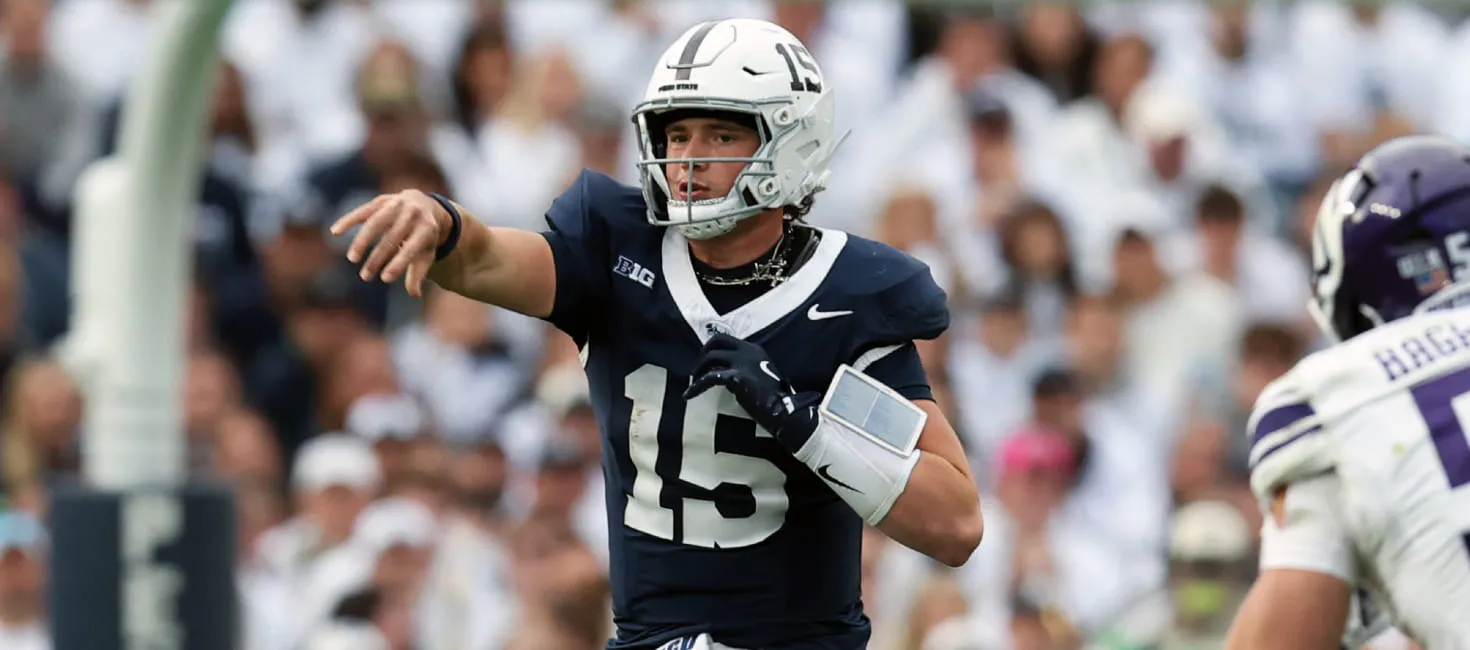
Fans shouldn't expect to see Aaron Rodgers on Thursday night, as the veteran might not see the field until Week 1 of the regular season. Therefore, Drew Allar should see plenty of action, especially if Mason Rudolph gets the night off.
The Pittsburgh Steelers will likely put Will Howard on the field before Allar. Therefore, the former Penn State star could play most, if not the entire, second half of the game against players trying to make a roster. Don't be surprised if Allar has a solid performance in front of the hometown fans.
Pick: Drew Allar Over 74.5 Passing Yards (-225 at Kalshi)
How to Bet on the 2026 NFL Preseason
NFL preseason betting scares a lot of bettors away, and for good reason: the normal rules of NFL wagering barely apply. But that same unfamiliarity is exactly where an edge lives for anyone willing to do the legwork. Here’s the full framework for approaching preseason betting the right way.
Why NFL Preseason Betting Is Different
The single most important thing to understand about preseason football is that, in most games, neither team is actually trying to win. That changes everything about how a smart bettor should approach it. Regular season and playoff betting is fundamentally about which team is better. Preseason betting is fundamentally about information: who’s playing, how long they’re playing, and how much a given coaching staff actually cares about the final score.
This makes preseason a grinder’s market. The people who do well are the ones reading beat reports, tracking depth charts, and paying attention to joint practice reports, not the ones picking a side because they like a team’s roster on paper. If you’re the type of bettor who enjoys college football or deep fantasy football research, digging into third- and fourth-string players, preseason betting rewards exactly that instinct.
The Real Risk: The Unknown
The scary part of preseason betting is the same thing that creates the edge: genuine uncertainty about who’s actually going to play. In the regular season, injury reports tell you almost exactly who’s available. In the preseason, you’re often working off vague coach-speak about how long a starter might play, if at all. Some coaches treat these games as a glorified walkthrough. A small handful treat them like they actually matter and want to win.
That gap between market perception and on-field reality is where the value hides. When the market overrates a team because it’s assumed to be starting more talented players, that’s usually the moment to look at the other side. It’s also worth remembering that week one of the preseason tends to feature almost entirely backups and fringe roster players, while later preseason games are more likely to feature real starter snaps, so the type of information you need to gather changes depending on which week you’re betting.
Five Edges to Look For
Quarterback rotations. Quarterback is the one position that consistently moves lines in real NFL football, and the same is true here. Knowing who starts, who finishes, and how the snaps are split matters enormously. Watch for players with real preseason track records, since some backups and journeymen quarterbacks reliably perform well in exhibition football even if they never translate that into regular season success. Veteran backup quarterbacks in general tend to be underrated in this spot, since they already know the offense and can execute cleanly, while rookies are often more rattled as they try to make a roster. A genuine quarterback competition is also a signal worth weighing, since both competitors have real incentive to play well and will typically see real reps with the starting supporting cast around them, unlike a preseason game where nobody is fighting for a job.
Coaching philosophy. Every coach approaches the preseason differently, and that matters. Some franchises have a clear, consistent history of caring about winning these games and playing their regulars accordingly. Most don’t, treating it as pure evaluation time instead. New head coaches carry an added wrinkle too, since it’s often their very first time managing a home game-day environment at their new stadium, adding one more variable that has nothing to do with the matchup itself. Just be careful not to overweight this factor. A coach known for trying to win preseason games can end up as a heavily favored team, and heavy preseason favorites often struggle to actually cover large spreads, since even a coach who wants to win rarely wants to blow a team out by two full touchdowns in a game that doesn’t count.
Joint practices. When two teams hold joint practices in the days leading up to a preseason game, especially over multiple days, that can drain real energy out of both rosters before the actual game even starts. If beat reporters describe those joint practices as unusually physical or competitive, that’s a real signal that the following game may be lower-energy and lower-scoring than the market expects, since the players have effectively already gotten their competitive reps in.
Beat reporter information. Local beat reporters generally have real incentive to accurately report on quarterback plans and playing time expectations, since they’re simply trying to set fan expectations for an exhibition game, not protect a competitive advantage the way coaches sometimes do during the regular season. That makes their reporting a genuinely reliable source for figuring out who’s playing and for how long, an edge that’s much harder to access once the regular season begins and coaches become more guarded with information.
Organizational depth. Talent eventually shows up on the field, even in a game where a team’s best players and best assets are sitting out. Teams with deeper rosters tend to fare better in these games since the backups actually playing are still trying to win their individual matchups and earn a roster spot. Paying attention to specific position-group depth charts can also hint at game-plan tendencies, since a team unusually thin at a given position may lean away from using it heavily in exhibition play to avoid unnecessary injury risk.
Historical Betting Trends Worth Knowing
A few long-running statistical trends are worth building into any preseason betting approach.
Underdogs are profitable. Preseason underdogs have covered the spread at a rate well above 50% dating back decades, and that trend has held up in recent seasons too. Small underdogs specifically, those getting one to three points, have covered at an even higher rate historically. Road underdogs getting a small number of points have performed especially well. All of this reflects the same underlying truth: the market tends to be overconfident in perceived stronger rosters even though home field advantage and roster pedigree matter far less than they do in real, competitive football.
Total points tend to run low, especially early. After a long offseason, bettors are often eager to bet the over out of pure excitement to see football again, but preseason scoring tends to run well below regular season norms. There’s a rough historical benchmark line in the high 30s for combined point totals: games with a total set meaningfully above that number have tended to go under more often than not, while games with unusually low posted totals have tended to go over. Treat unusually high preseason point totals with real skepticism.
Strong performances tend to carry over, not regress. Conventional regular season betting wisdom says a team that blows out an opponent is likely to be overvalued the following week. Preseason works the opposite way. Teams that win convincingly in one preseason game have historically performed well again the following week, both straight up and against the spread. The market doesn’t fully price in that carryover effect, making a team coming off a strong preseason performance a reasonable side to back again the next week, especially against an opponent that had a more middling result of its own.
When to Actually Place the Bet
Unless you have real insider information about how a team plans to deploy its roster, it’s generally smarter to wait rather than bet as early as possible, the opposite of typical regular season strategy. Preseason lines are driven almost entirely by information, not by any real assessment of team strength, and that information often doesn’t firm up until close to kickoff. Respect real line movement when you see it, since sharp, sudden shifts usually reflect real news, like a confirmed starting quarterback plan, rather than pure public betting volume. Chasing closing line value for its own sake matters far less here than simply being right on which players are actually going to play.
Common Mistakes to Avoid
Before placing a preseason bet, run through this checklist:
- Betting the teams instead of the actual players expected on the field
- Betting based on star power rather than confirmed playing time
- Ignoring beat reporter information about quarterback plans and rotations
- Assuming home field advantage matters the way it does in the regular season
- Overreacting to the score of a team’s previous preseason game
- Blindly following a betting trend without checking whether it actually applies to the specific game in front of you
Instead, before betting any preseason game, try to answer these questions: Who’s playing quarterback, and what does the rotation look like? What has the coaching staff said publicly? Did the two teams hold joint practices, and how did those go? Does this specific coach have a track record of caring about winning preseason games? Has the betting line moved, and if so, why? Answering those questions honestly is what separates a grinder’s edge from a guess.

Mike Fanelli is a featured writer at BettingPros. For more from Mike, check out his archive and follow him @Mike_NFL2.